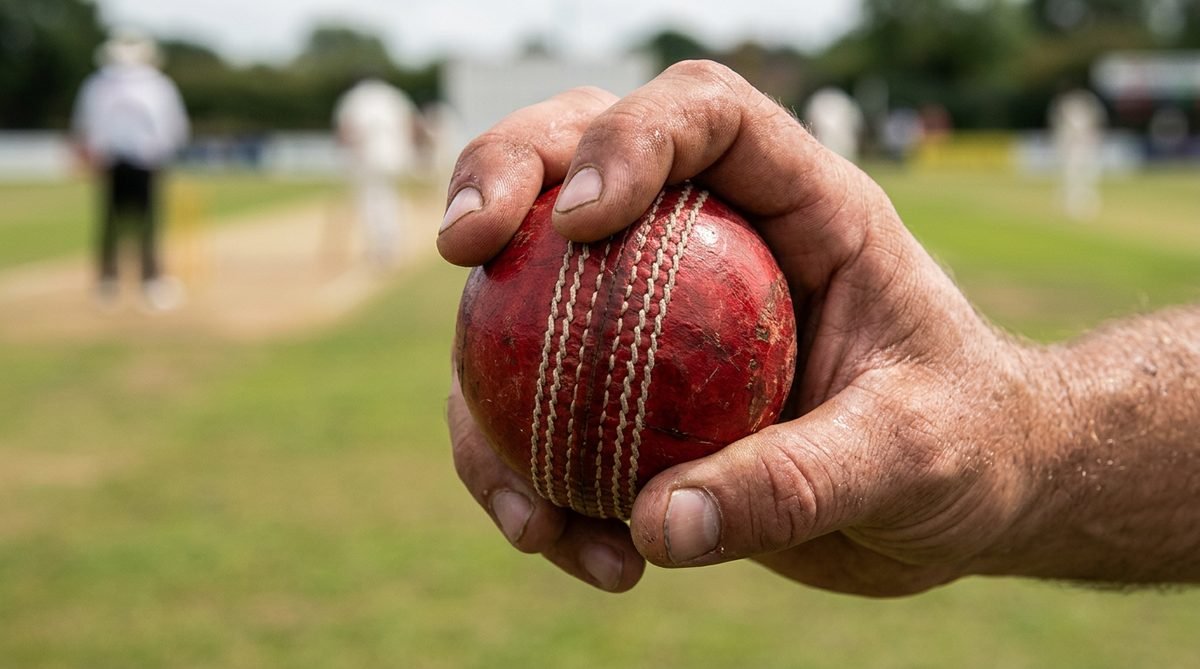
You don’t need nets, a bowling machine or even a partner to become a better batter. Ten to twenty minutes a day of shadow batting, hanging-ball work, wall drills and footwork patterns at home will sharpen your timing, balance and hand-eye coordination far more than one long session a week. Below are 10 drills you can do in a room, a terrace, a gully or a small backyard, with the equipment, steps and common mistakes for each.
We may earn a commission from Amazon links, at no extra cost to you. See our disclosure.
Quick plan: which drill trains what
| Drill | Main skill | Space needed | Equipment |
|---|---|---|---|
| 1. Mirror shadow batting | Stance, backlift, shape | Small room | Bat, mirror |
| 2. Hanging ball straight drive | Timing, full face | Terrace or porch | Bat, hanging ball |
| 3. Hanging ball defence | Soft hands, head position | Terrace or porch | Bat, hanging ball |
| 4. Wall rebound catches | Hand-eye, reaction | Wall + 3 m | Tennis ball |
| 5. Bat-edge bounce | Watching the ball | Anywhere | Bat, tennis ball |
| 6. Drop-feed drives | Front-foot transfer | Gully or garden | Bat, soft balls, helper |
| 7. Front/back foot calls | Footwork decisions | 2 m x 2 m | Bat, chalk or tape |
| 8. Stump-line leave | Off-stump awareness | Small room | Bat, one stump or bottle |
| 9. Sock-ball throwdowns | Pull and cut shapes | Room or corridor | Bat, rolled socks, helper |
| 10. Grip and wrist strength | Bat control | Anywhere | Bat, towel or tennis ball |
What you need before you start
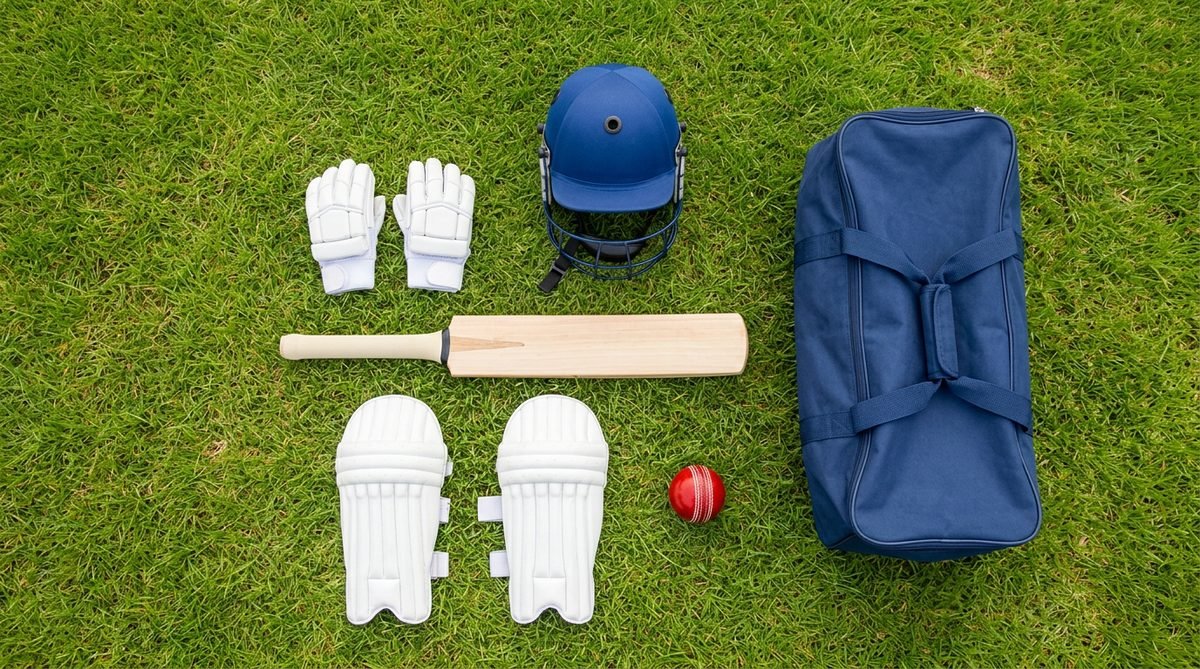
Most of these drills only need your normal bat, a couple of tennis balls and a clear space. If you are buying a bat for a junior, check our cricket bat size chart first, because a bat that is too heavy ruins technique faster than any lack of practice. For indoor work, a light tennis-ball bat is safer for walls and furniture than a leather-ball bat.
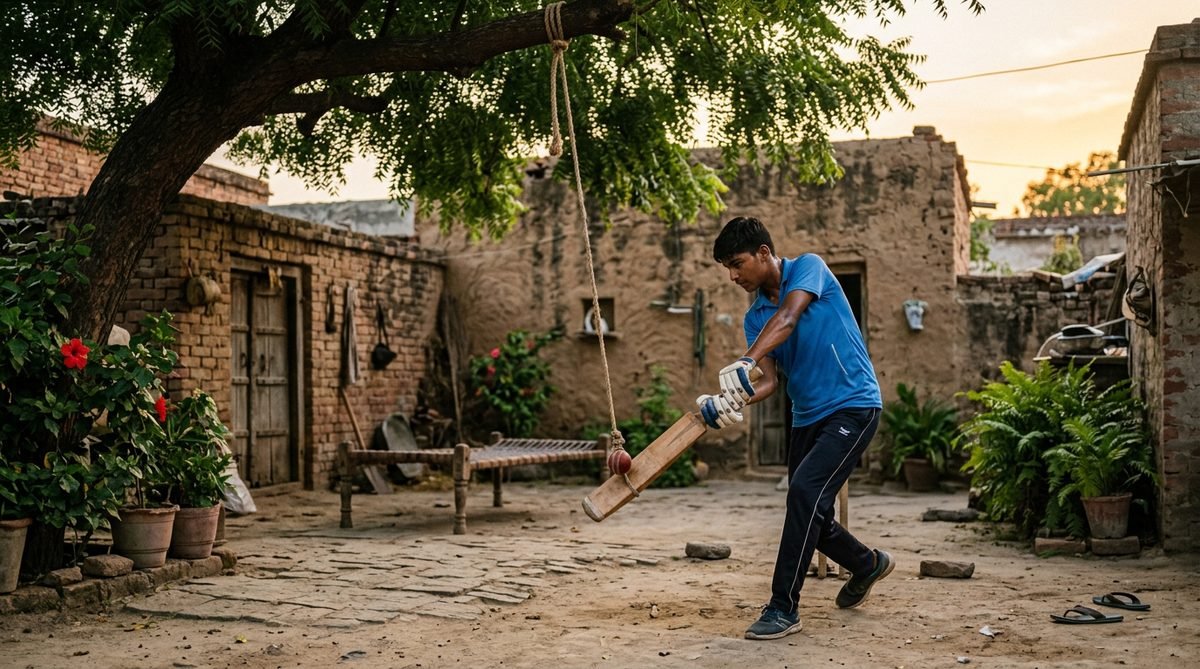
The one training aid worth buying is a hanging (knocking) ball: a ball on a long cord that you tie to a beam, hook or tree branch so it swings back after every shot. Two common options on Amazon.in are the TIMA Leather Hanging Practice Ball with rope (roughly ₹250–400 on Amazon.in, Nov 2026) and the SG iBall (synthetic ball with cord) (price varies by seller). Both are popular based on specs and verified buyer feedback; a synthetic ball is kinder to new bats and walls, while a leather ball gives a more match-like feel. If you use a leather ball on a new English willow bat, knock the bat in properly first.
The 10 drills
1. Mirror shadow batting (5 minutes)
- Stand side-on to a mirror in your normal stance, feet shoulder-width apart, weight on the balls of your feet.
- Check that your eyes are level and your head is still, not tilted towards the off side.
- Pick up the bat as if the bowler is in delivery stride, then play a slow forward defence, front drive, back-foot defence and pull, holding the finish of each for two seconds.
- Do 10 of each shot, watching that the bat comes down straight and your head stays over the front knee on drives.
Common mistake: rushing. Shadow batting only works when every rep is slow and correct; speed comes later.
2. Hanging-ball straight drive (5–10 minutes)
- Hang the ball so it rests at about mid-shin height when still, with at least 2 metres of clear space in front and behind.
- Set up so the ball sits just in front of your front pad when you stride.
- Push the ball away with a short straight drive, let it swing back, and play it again on the return.
- Aim for 20 clean hits in a row with the full face of the bat, then slowly increase the swing.
Common mistake: hitting too hard. A big swing sends the ball wrapping around the beam and teaches nothing. Short, controlled pushes build timing.
3. Hanging-ball defence with soft hands
- Use the same setup, but this time play a forward defence and try to “kill” the ball so it barely moves away from the bat.
- Loosen your bottom-hand grip to just the thumb and two fingers.
- Keep the bat angled down, handle ahead of the blade, so the ball drops at your feet.
- Do three sets of 15.
Common mistake: pushing at the ball with hard hands. On a real pitch that is how edges carry to slip.
4. Wall rebound catches
- Stand 2–3 metres from a solid wall with a tennis ball.
- Throw underarm so the ball bounces once on the floor, hits the wall and comes back; catch it with one hand.
- Alternate hands, then step closer to make it faster.
- Track the ball all the way into your hand; that same habit is what you need when batting.
This is technically a fielding drill, but it is one of the best ways to sharpen the reactions batters rely on against short balls.
5. Bat-edge bounce
- Hold the bat face up and bounce a tennis ball on the face 50 times without dropping it.
- Once that is easy, bounce it on the edge of the bat.
- Then alternate face and edge, or walk while you bounce.
Why it works: it forces you to watch the ball onto the bat, which is the single most repeated coaching instruction in cricket.
6. Drop-feed drives
- A parent, sibling or friend stands beside you, slightly in front, holding a tennis ball at shoulder height.
- They drop the ball so it bounces just in front of your front foot.
- Stride forward and drive it along the ground into a wall, net or cushion.
- Vary the drop position slightly to practise off drives, straight drives and on drives.
Common mistake: falling over to the off side. Finish balanced, with your weight on the front leg and the back toe on the ground.
7. Front-foot / back-foot calls
- Mark your crease with chalk or tape, plus one mark a stride forward and one a step back towards the stumps.
- A helper shouts “full”, “short” or “leave” at random.
- On “full”, stride forward and shadow a drive; on “short”, move back and across for a back-foot defence or pull; on “leave”, shoulder arms.
- Return to your stance each time. Do 3 sets of 20 calls.
Alone? Record random calls on your phone and play them back.
8. Stump-line leave drill
- Place a single stump or a water bottle where your off stump would be.
- Take guard and shadow the leave: front foot across, bat high over the shoulder, eyes watching an imaginary ball pass outside off.
- Glance down after each leave to check your front foot is on or just outside the off-stump line.
Good leaving is a skill, especially for openers on seaming tracks. It is easy to practise at home and almost nobody does.
9. Sock-ball throwdowns for pull and cut
- Roll a pair of socks into a tight ball. It is soft enough to use indoors without breaking anything.
- A helper throws gently from 4–5 metres, at chest height for pulls and wide of off stump for cuts.
- For the pull, move back and across, turn your hips and roll your wrists so the ball goes down. For the cut, get back, wait for the ball and play it late with arms extended.
- 10 of each, then swap to the other shot.
10. Grip and wrist strength
- Squeeze a tennis ball in each hand, 3 sets of 20.
- Hold the bat at arm’s length in front of you with one hand and slowly tilt it up and down from the wrist, 10 times each hand.
- Twist a rolled towel in opposite directions, like wringing it out, for 30 seconds.
Stronger forearms let you control the bat later in the shot. Wearing your batting gloves for some sessions helps you get used to the grip feel you will have in a match.
A simple 20-minute home session
- Warm-up (3 min): arm circles, light jogging on the spot, wrist rolls.
- Technique (5 min): mirror shadow batting.
- Timing (7 min): hanging-ball drives and defence, or drop-feed drives.
- Reactions (3 min): wall catches or bat-edge bounce.
- Finish (2 min): grip work and a stretch.
Rotate the timing and reaction drills through the week so you cover footwork, leaving and short-ball shots too. Five short sessions beat one long one.
How to choose the right drills for you
- Getting bowled or LBW often? Focus on drills 1, 7 and 8: straight bat, footwork and knowing your off stump.
- Edging to the keeper or slips? Drill 3 (soft hands) and drill 8 (leaving).
- Mistiming drives? Drills 2 and 6, with the emphasis on head over the ball.
- Struggling against pace or bounce? Drills 4, 5 and 9 for reactions and short-ball shapes.
- Young beginners (under 10): Keep it playful with drills 1, 5 and 6 using a soft ball, and stop while they are still enjoying it.
Ask your coach which fault shows up most in matches, then spend most of your home time on that one area.
Safety note for kids and parents
Use tennis balls, rubber balls or sock balls indoors, never a leather ball. Clear the area of glass, lamps and younger siblings before anyone swings a bat. Check that the hook or beam holding a hanging ball is strong and the cord is not frayed, and keep the swing zone clear. Children should practise throwdowns with an adult feeding, and any drill with a hard ball needs a helmet and proper protective kit. Stop if a child complains of wrist, back or shoulder pain.
FAQ
Can I really improve my batting at home without nets?
Yes. Home drills will not replace facing real bowling, but they build the stance, footwork, head position and timing that you then take into the nets. Many young batters improve fastest when they combine one or two net sessions with short daily home practice.
Is a hanging ball worth buying?
For most players, yes. It is cheap, needs no partner and gives you hundreds of hits in a short session. Choose a synthetic ball if you are practising near walls or with a new bat, and a leather one if you want a more realistic feel.
How long should a home batting session be?
Fifteen to twenty minutes is plenty for most players, five or six days a week. Quality matters more than time; once you get tired and your technique slips, stop.
Which bat should I use for indoor drills?
Use a light tennis-ball bat or an old bat for wall and sock-ball drills. For hanging-ball work with a leather or hard synthetic ball, use a properly knocked-in bat of the right size. A Kashmir willow bat is a sensible, low-cost choice for regular home practice.